The Civil War Is Over: Reflections on a Promise, a Presidency, and a Piece of History
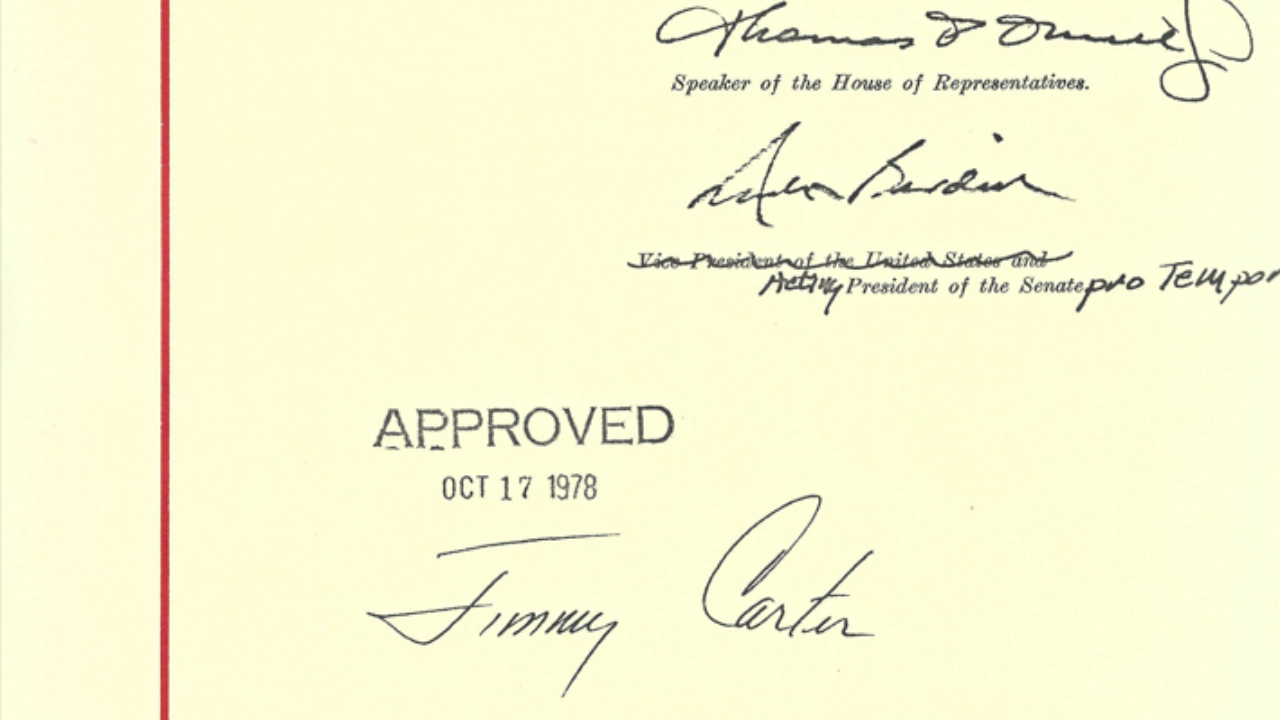
On November 7, 1978, just weeks after President Carter signed Public Law 95-466, Senator James Eastland mailed Dr. Howard Edward Haller a clipping from The Washington Post with the headline:
“Carter: The Civil War is Over.”
For Howard — great-great-grandson of Jefferson Davis — those five words meant the long journey was complete. A promise made to his grandmother had been kept.
The Final Punctuation Mark
A few months later, on February 16, 1979, the White House sent Howard one of his most cherished possessions: a red-line copy of the signed Joint Resolution and an official letter from the President’s office.
“With every good wish,” it read. And Howard knew the work — and the waiting — had been worth it.
An Elevator Ride to Remember
Decades later, in 2005, Howard returned to the Senate as a doctoral researcher. Senator Orrin Hatch ushered him onto the private elevator. Inside stood Senator Trent Lott, who looked at Howard with sudden recognition.
“Woah! You’re the guy… the one that helped with the bill for President Jefferson Davis.”
It was a brief handshake, but for Howard, it carried the full weight of 13 years of work and the people — senators, staffers, and friends — who had helped along the way.
More Than Family History
The Jefferson Davis citizenship restoration was never just about politics. It was about truth, reconciliation, and the power of keeping a promise.
As Howard often said, “We don’t always get to choose the history we inherit… but we can choose how we respond to it.”